
This article contains affiliate links. If you purchase through these links, we may earn a commission at no additional cost to you. This helps support our website and allows us to continue creating free content. Our recommendations are based on our independent research and editorial standards.
The job market is changing quickly, but that doesn't mean you need to chase every new technology or completely retrain yourself every year.
In 2026, being competitive is increasingly about having a useful combination of skills.
You might be good at your core job, but adding data literacy can make you more valuable. Strong communication becomes even more useful when teams are distributed. AI skills can help you work faster, while leadership, problem-solving and project management can help you take on more responsibility.
Think of it as a professional skills stack.
Instead of relying on one qualification or one technical ability, you build a combination of skills that makes you more adaptable.
And you don't necessarily need to return to formal education to do it. Udemy currently has thousands of courses across career development, AI, data, communication, leadership, project management and other professional skills, making it possible to build your stack one skill at a time.
What is a professional skills stack in 2026?
A professional skills stack is a combination of technical, business and human skills that work together to make you more effective at your job.

The most useful stack is usually a mixture of:
AI and digital fluency
Data literacy
Communication
Problem-solving
Adaptability
Project management
Leadership
Business understanding
Productivity
Career and personal branding
You don't need to become an expert in all ten.
The idea is to become very good at your core profession and then add complementary skills around it. This is where platforms such as Udemy become useful because you can choose targeted courses instead of following one fixed curriculum.
1. AI literacy is becoming a basic professional skill
You don't have to become an AI engineer to benefit from AI.
For many professionals, the more useful skill is understanding how to work with AI effectively, where it can save time, how to write better prompts, how to check its output and where human judgement still matters.
Udemy's current AI catalogue includes courses ranging from introductory AI and AI agents to more technical areas such as generative AI development. Its September 2026 AI category lists more than 3,000 courses and thousands of hands-on learning options.
For a non-technical professional, start with practical AI use rather than trying to learn machine learning immediately.
Learn how AI can help you research, summarise information, analyse documents, generate ideas and automate repetitive work. Then apply it to your actual job.
2. Data literacy helps you make better decisions
You don't need to become a data scientist to become more data-literate.
You should be comfortable reading numbers, spotting trends, asking sensible questions about data and turning information into a useful business decision.
Excel remains one of the easiest places to start. Udemy's current Excel catalogue includes courses covering everything from basic spreadsheets to advanced formulas, data analysis and visualization. The platform currently lists more than 19 million Excel learners and an average course rating of 4.6.
From there, you can move into SQL, Power BI, statistics or broader data analytics depending on your career.
The important thing is learning to answer the question behind the spreadsheet: What does this data actually tell us?
3. Communication still matters in an AI-heavy workplace
Technology can automate tasks, but it doesn't remove the need to explain an idea clearly.
You still need to write an effective email, present a recommendation, handle disagreement, listen properly and explain complicated information to someone who doesn't share your expertise.

Udemy's current communication category includes more than 1,300 courses and 1,700 hands-on learning options. Its featured selection includes The Complete Communication Skills Master Class for Life and Write Better Emails: Tactics for Smarter Team Communication.
This is one of the easiest skills to underestimate.
A technically brilliant employee who cannot explain their work can struggle to influence decisions. Someone who can combine expertise with clear communication is much easier to trust.
4. Problem-solving is more valuable than simply knowing procedures
The workplace rarely gives you a perfect set of instructions.
Something goes wrong. A customer changes their requirements. A deadline moves. A process stops working. A colleague raises an unexpected problem.
That is when problem-solving matters.
You want to become someone who can understand a situation, separate symptoms from causes, consider different options and make a sensible decision.
This skill also works particularly well alongside AI. Let AI help you generate possibilities or organise information, but keep the judgement for yourself.
5. Project management makes you useful beyond your job description
You don't need the title “project manager” to benefit from project management skills.
Most professionals eventually have to manage deadlines, dependencies, stakeholders, budgets, risks or competing priorities.
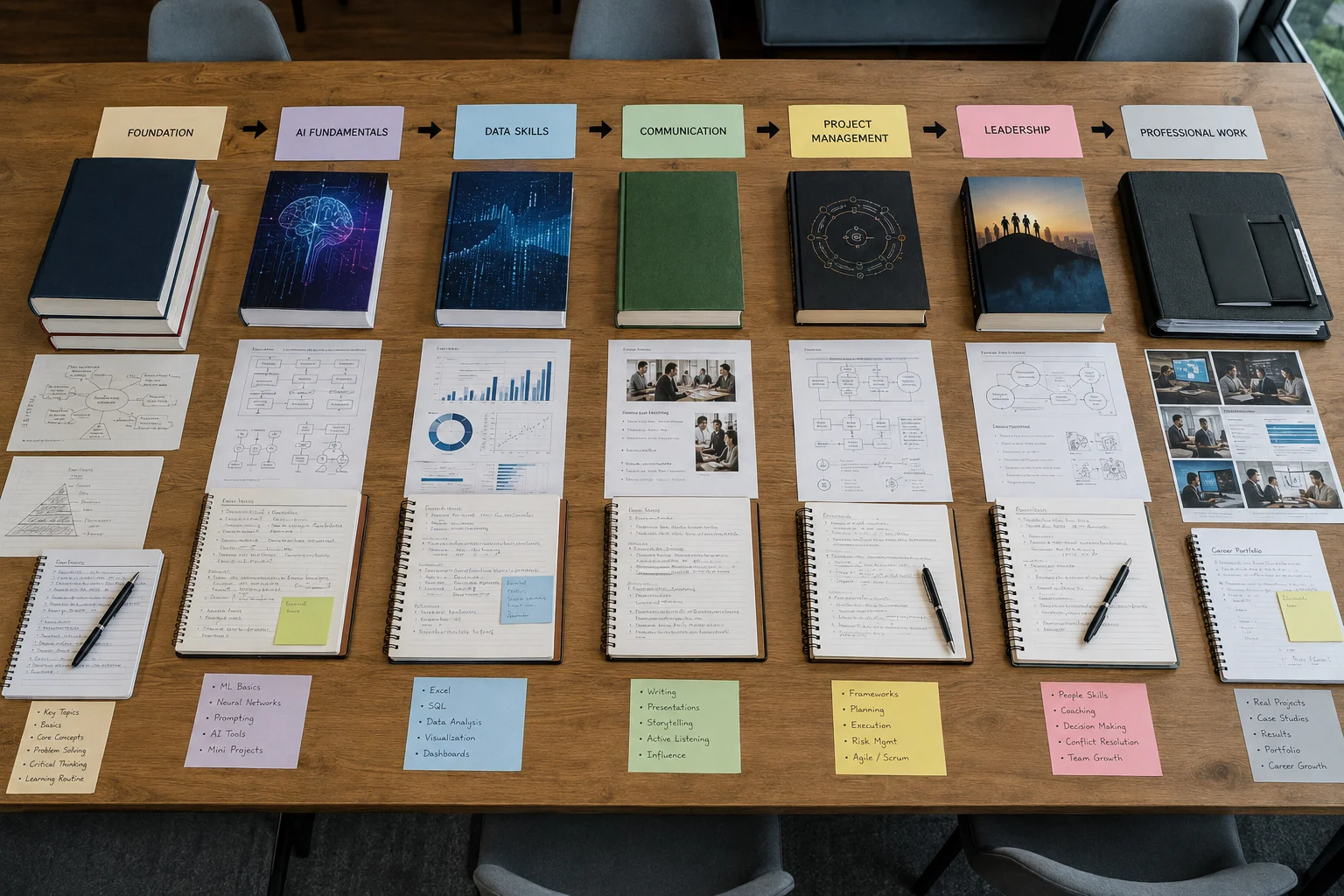
Udemy's current project management catalogue includes more than 1,400 courses, with thousands of hands-on practice options. Current courses also increasingly connect project management with AI, including preparation for the PMI-CPMAI certification.
Learn the basics of planning, risk management, stakeholder communication and delivery.
It can make you much more effective even if project management is only one part of your actual role.
6. Leadership is not just for managers
One of the biggest mistakes people make is waiting for a management title before developing leadership skills.
Leadership is really about influencing people, creating clarity, taking responsibility and helping a group move towards an outcome.
That can happen whether you're managing ten people, leading a small project or simply becoming the person colleagues rely on when something needs to get done.
Udemy's September 2026 leadership catalogue includes more than 1,500 courses and an average course rating of 4.5. Current offerings range from practical leadership skills to courses designed specifically for new managers.
If you want to progress professionally, leadership is one of the strongest skills to add to a technical or specialist foundation.
7. Adaptability helps you stay useful when the job changes
Some skills remain useful for decades.
Others change rapidly.
The ability to learn, unlearn and learn again therefore becomes a professional skill in its own right.
Udemy's current career-development catalogue features Future Skills: Emerging Technologies & Career Strategy, a course focused on how AI, automation and broader trends are reshaping work and how professionals can stay relevant.
You don't need to predict exactly what work will look like in five years.
Instead, develop the habit of regularly asking: What is changing in my industry, and what do I need to understand next?
That question can keep your skills from becoming outdated.
8. Productivity is about managing attention, not just time
Being busy isn't the same as being productive.
Modern professionals often have more communication channels, more meetings and more information competing for their attention than ever.

Learning how to prioritise, organise work, protect focused time and use digital tools effectively can therefore have a surprisingly large impact.
This is another area where a short, focused Udemy course can make sense. You don't necessarily need a huge programme. Sometimes one practical course that changes how you structure your working day can be more valuable than another certificate sitting on your CV.
9. Business understanding makes specialist skills more valuable
Imagine two analysts.
One can produce excellent reports.
The other understands the numbers but also knows how those numbers affect revenue, customers, costs and business decisions.
The second person is likely to have more influence.
You don't need an MBA to develop commercial awareness. Learn how your organisation makes money, who its customers are, what its main costs are and which metrics matter.
Udemy's business analytics catalogue currently includes courses covering statistics, data-driven decision-making and business analysis.
The more clearly you can connect your work to business outcomes, the easier it becomes to demonstrate your value.
10. Career positioning is a skill too
There is one final skill that often gets ignored.
Knowing how to present what you can do.
Your CV, LinkedIn profile, portfolio, interview answers and professional network all influence how other people understand your experience.
Udemy's current resume and career catalogue includes courses covering CV writing, LinkedIn, interviews, networking and AI-assisted job searching. One featured course, Career Hacking: The Ultimate Job Search Course (Now w/ AI!), combines these areas into one career-focused programme.
This matters even if you're not looking for a new job today.
Your professional reputation is something you build before you need it.
How should you build your professional skills stack?
Don't try to learn all ten skills at once.
A better approach is to choose one core skill and two supporting skills.
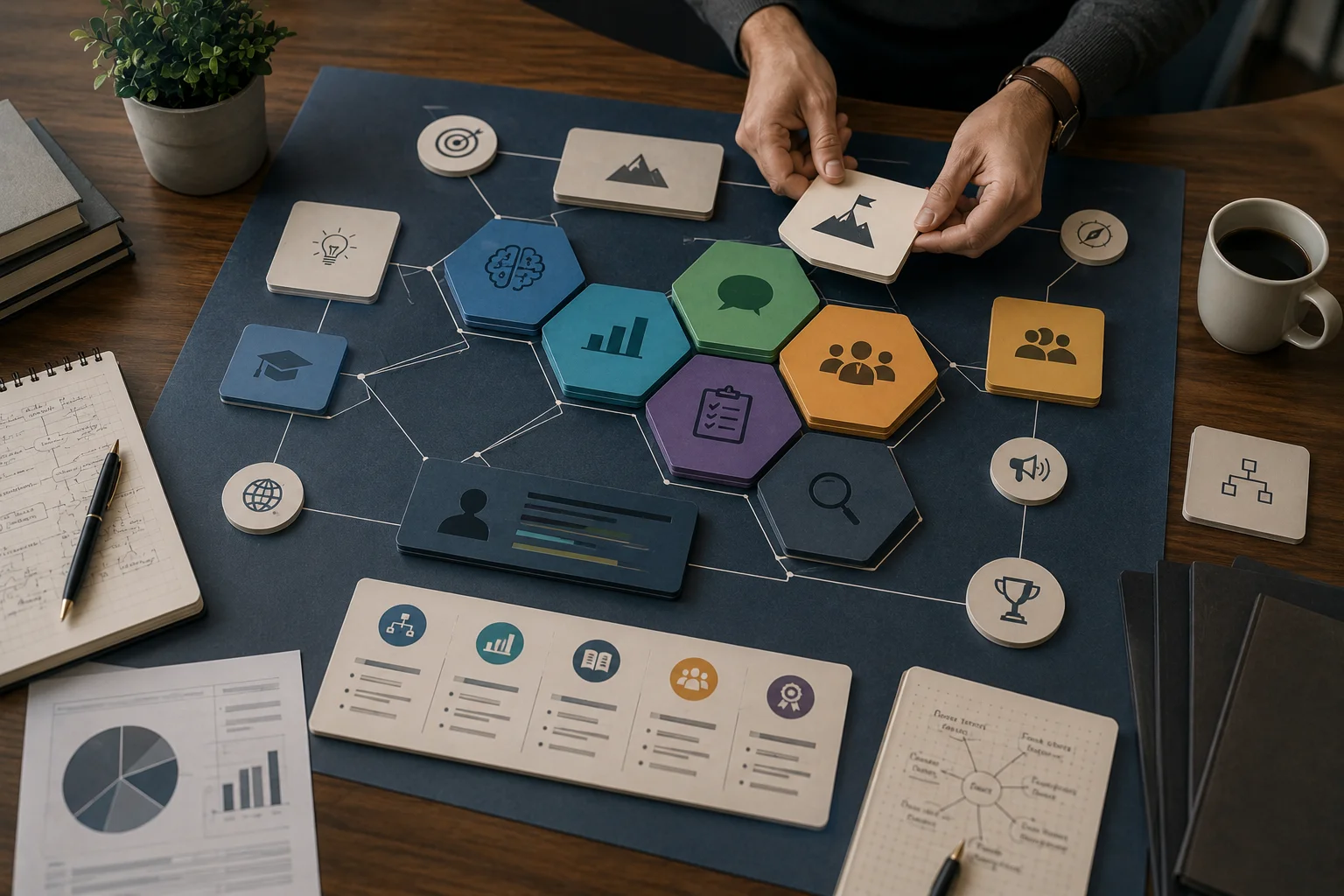
For example:
Your main career | Strong skills to add |
|---|---|
Marketing | AI, data analysis, communication |
Finance | Excel, data, AI |
Project management | AI, leadership, communication |
Sales | AI, data, negotiation |
Technology | Communication, business, leadership |
Operations | Data, project management, AI |
Design | AI, communication, business |
HR | AI, data, communication |
Management | Leadership, AI, data |
This is where Udemy's breadth can be particularly useful.
You can start with one course, practise what you learn, then add another skill when there is a genuine reason for doing so. The platform's current career-development offering includes dedicated future-skills content as well as specialist learning across AI, data, communication, leadership and project management.
What should you learn first in 2026?
Start with the skill that solves the biggest problem in your current career.
If you spend too much time producing reports, learn data or automation.
If you're technically strong but struggle to influence people, work on communication.

If you're constantly coordinating work across teams, learn project management.
If you're aiming for promotion, leadership may be the better investment.
And if you're worried about AI changing your role, start building AI literacy now rather than waiting until your employer makes it mandatory.
The best learning plan is not necessarily the one with the most courses.
It is the one you actually use.
A simple 2026 professional learning plan
You can build a useful skills stack without turning learning into a second full-time job.
Month 1: Identify your gap
Look at your current role, the next role you want and the skills appearing repeatedly in relevant job descriptions.
Month 2: Learn one core skill
Choose one focused Udemy course and work through it properly. Take notes, complete exercises and apply the ideas to your actual work.
Month 3: Add a complementary skill
Choose something that makes the first skill more valuable. For example, pair data analysis with communication or AI with project management.
Month 4 onwards: Build evidence
Use your new skills in real projects. Create a portfolio piece, improve a process, automate a repetitive task or take responsibility for a new type of work.
That final stage is important.
Skills become much more valuable when you can show what you have done with them.
FAQs about professional skills to learn in 2026
What are the most important professional skills in 2026?
AI literacy, data literacy, communication, problem-solving, adaptability, project management, leadership, productivity, business understanding and career positioning are all useful areas to develop.
Do I need to learn AI to stay competitive?
AI literacy is increasingly useful across many professional roles. You do not necessarily need technical AI development skills; understanding how to use AI effectively and responsibly may be the more relevant starting point.
Is Excel still worth learning in 2026?
Yes. Excel remains widely used for organising, analysing and visualising business information, and Udemy continues to offer a large range of Excel courses for different skill levels.
Should I focus on technical or soft skills?
Ideally, both. Technical skills can help you perform the work, while communication, leadership and problem-solving help you use those skills effectively and progress professionally.
Can Udemy help me build a professional skills stack?
Yes. Udemy has current course categories covering career development, AI, data analysis, Excel, communication, leadership and project management, allowing you to build skills individually or combine several areas into a broader learning path.
Should I take several courses at the same time?
Usually, no. Pick one priority skill, complete enough learning to apply it and then decide what should come next.
Are certificates enough to stay competitive?
Not on their own. A certificate can demonstrate learning, but practical evidence of using a skill is usually much stronger when you're trying to show what you can actually do.
What is the best way to decide what to learn?
Look at your current role and the role you want next. Identify the skills that would create the biggest improvement in your effectiveness or make you a stronger candidate, then learn those first.
Final thoughts
The strongest professional in 2026 isn't necessarily the person who knows the most technologies.
It is often the person who knows how to combine skills.
Someone who understands their industry, can work with AI, reads data, communicates clearly, manages projects and knows how to solve problems is difficult to replace with a single tool.
That is the real idea behind a professional skills stack.
You don't need to learn everything.
Choose the skills that make your existing experience more valuable, build them one at a time and keep adding to the stack as your career changes.
Explore Udemy's current professional and career-development courses and start with the skill that can make the biggest difference to your working life in 2026.

Written By
Samuel Green
Career Content Specialist — 10+ years covering recruitment and career development.