
This article contains affiliate links. If you purchase through these links, we may earn a commission at no additional cost to you. This helps support our website and allows us to continue creating free content. Our recommendations are based on our independent research and editorial standards.
The perfect golf bag isn't necessarily the one with the most expensive clubs in it.
It's the one where every club has a job.
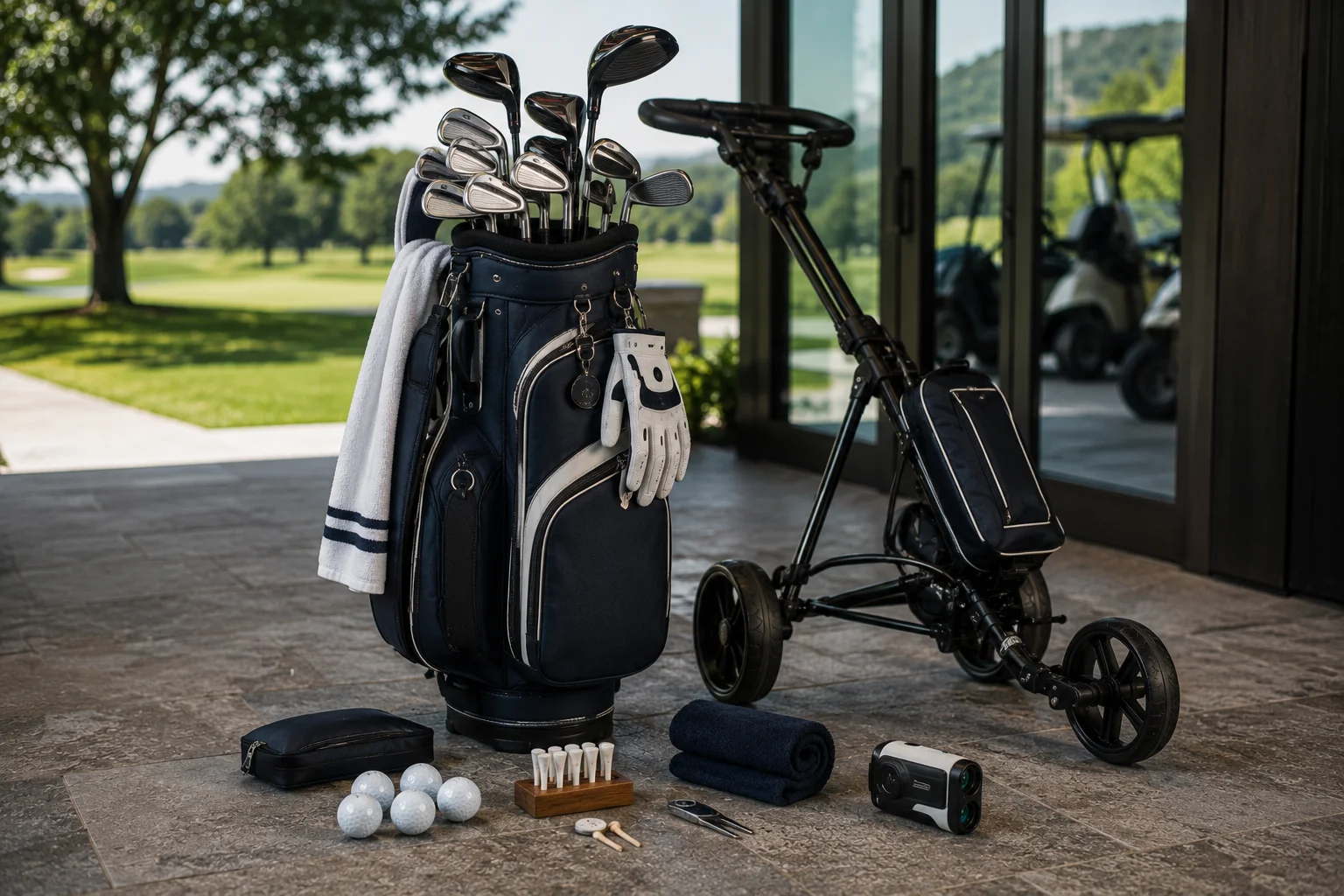
For most golfers, that means building a setup around a driver, fairway wood or hybrid, irons, wedges and putter, then filling the remaining space with the balls, gloves, towels, GPS and other accessories that genuinely make a round easier.
The interesting part is that there isn't one universal setup.
A low-handicap golfer may want a different combination from someone who plays casually at weekends. Even two golfers with similar handicaps can need completely different clubs because of differences in swing speed, launch, course conditions and the distances they actually hit.
That is why golf bag essentials should be considered as a system rather than a shopping list.
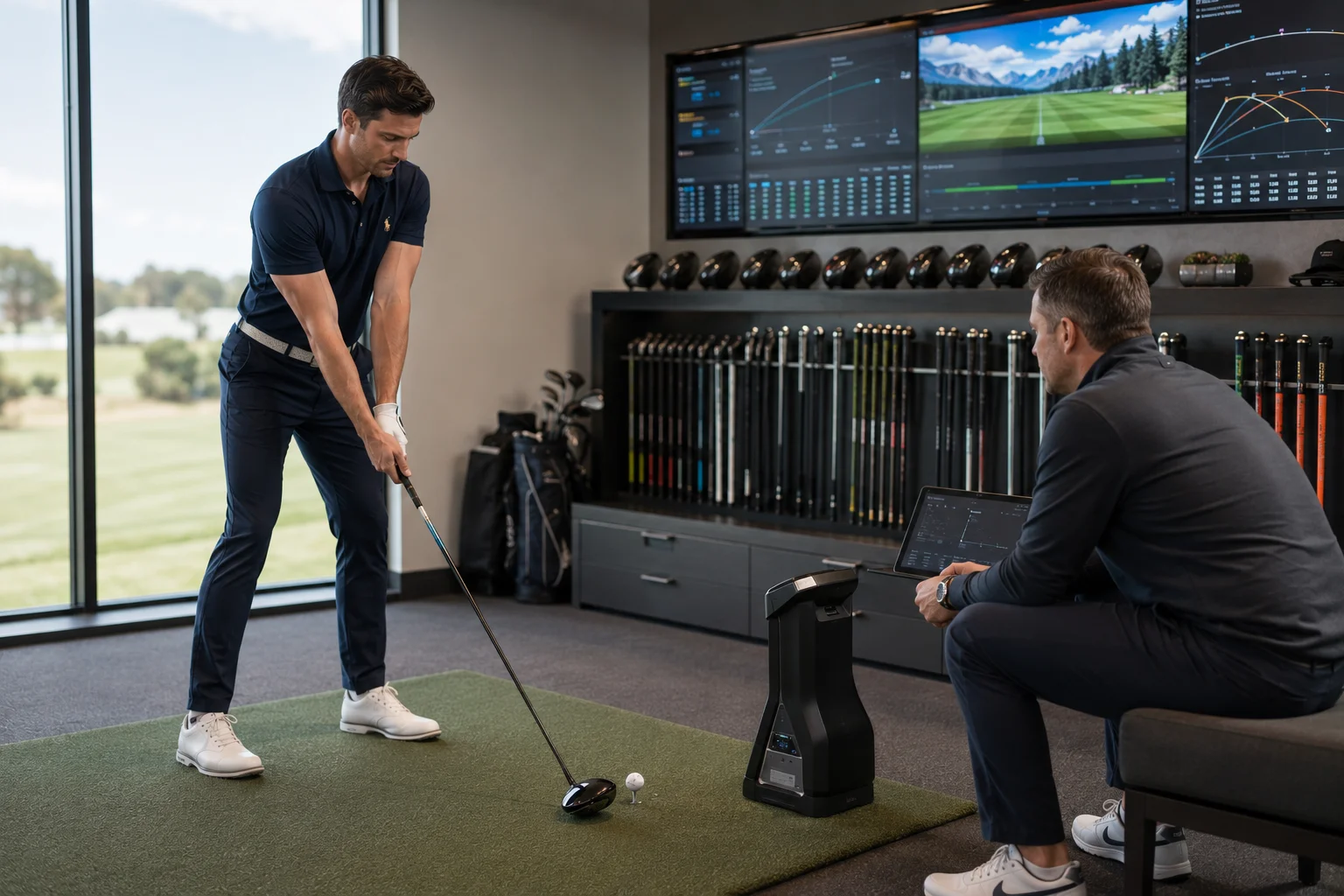
American Golf is particularly useful here because you can explore the major equipment categories in one place, from clubs and balls to golf technology, footwear, apparel and accessories.
What are the essential golf bag items in 2026?
The essential golf bag setup includes a driver, fairway wood or hybrid, irons, wedges, putter, golf balls, gloves, towel and tees, with GPS or rangefinding technology added according to your preferences.
Golf bag essential | What it does | Priority |
|---|---|---|
Driver | Longest tee shots | Essential |
Fairway wood | Long shots from tee or fairway | Very useful |
Hybrid | Easier alternative to long irons | Very useful |
Irons | Approach and fairway shots | Essential |
Wedges | Short game and scoring | Essential |
Putter | Putting | Essential |
Golf balls | Ball flight and scoring | Essential |
Gloves | Grip and comfort | Recommended |
GPS/rangefinder | Distance information | Optional but useful |
Towel | Cleaning equipment | Essential |
Tees | Tee shots | Essential |
Ball marker | Marking your ball | Useful |
Divot tool | Repairing greens | Useful |
You don't necessarily need every club category.
What you need is useful distance coverage without unnecessary duplication.
Which driver should you choose?
Choose a driver according to your swing, preferred launch, forgiveness and distance control rather than simply buying the longest or most expensive model.
The driver is usually the first club people think about when building a bag.
It is also one of the easiest clubs to buy badly.
A driver that produces another 10 yards but puts the ball deep into the trees isn't necessarily an improvement.
For many golfers, forgiveness deserves serious consideration.
Look at loft, shaft flex, shaft weight and head design. If you're investing heavily in a new driver, a custom fitting can also help identify a configuration that suits your swing.
American Golf's broad driver selection makes it easier to compare different manufacturers and specifications before making that decision.
Do you need a fairway wood?
A fairway wood is useful for long shots where you want more control than a driver, although some golfers will find a 5-wood more practical than a traditional 3-wood.
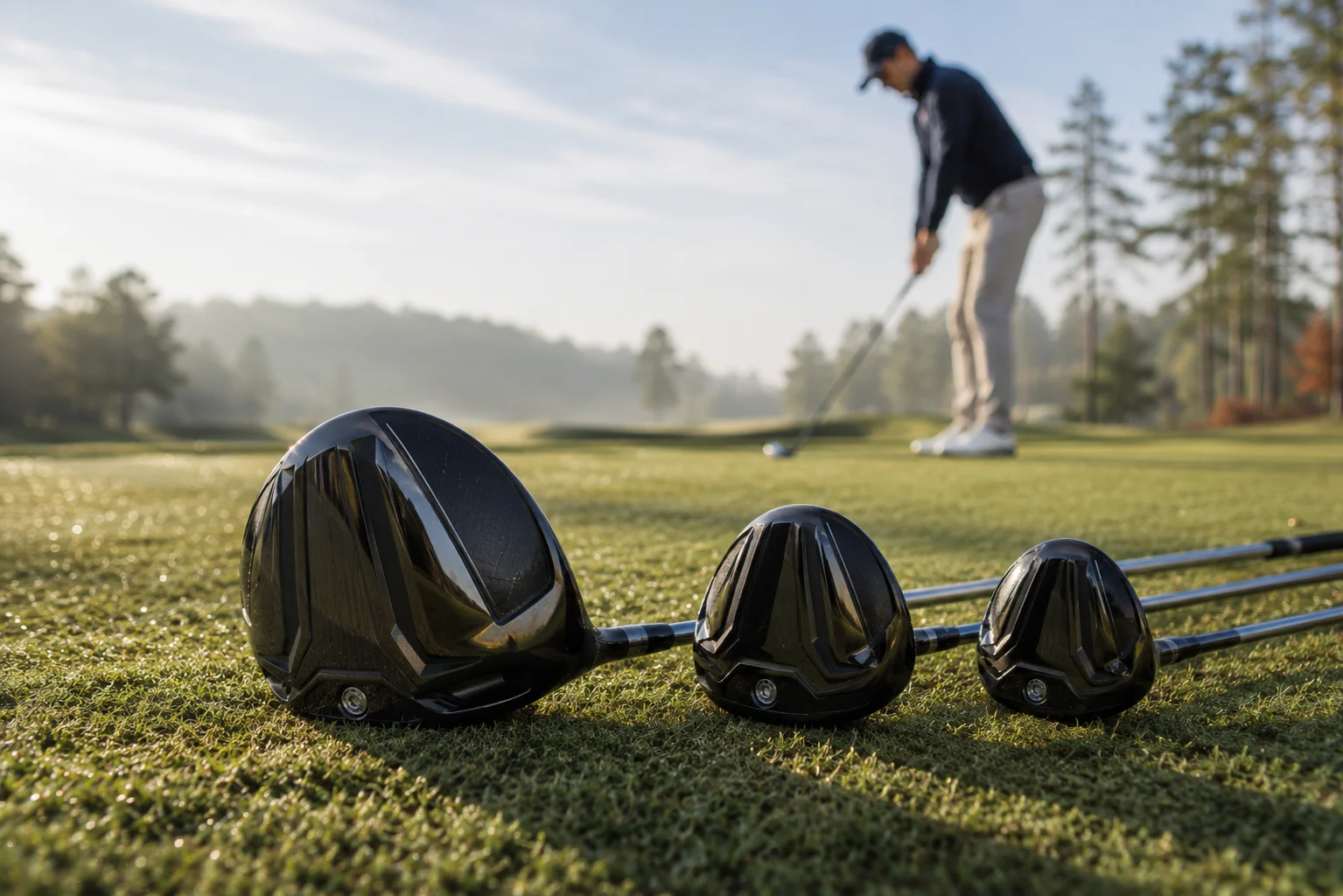
The 3-wood has traditionally been a standard part of the golf bag.
But tradition isn't a good enough reason to carry one.
If you struggle to launch a 3-wood from the fairway, try a 5-wood. You may find that the additional loft produces a more reliable shot.
American Golf's fairway wood range gives golfers the opportunity to compare lofts and designs rather than automatically defaulting to the most traditional setup.
That's worth doing.
Is a hybrid better than a long iron?
A hybrid can be a more forgiving and easier-to-launch option than a long iron, making it particularly useful for golfers who struggle with longer clubs.
This is one of the biggest practical changes in modern golf bags.
A hybrid can work from the fairway, rough and tee, giving you a versatile option between your woods and irons.
For some players, replacing a 3-iron with a hybrid makes immediate sense.
For others, a 4-iron may still be their preferred club.
The answer comes down to performance.
Take the two clubs to a fitting or launch monitor and compare the actual results.
Don't choose based solely on what looks good in the bag.
How many irons should you carry?
Carry enough irons to create sensible distance gaps while avoiding unnecessary overlap with your hybrids, fairway woods and wedges.
A conventional iron set might run from a long iron through pitching wedge, but modern lofts vary considerably between manufacturers.
That's why the number printed on the sole isn't the whole story.
Your 5-iron might have a similar loft to another brand's 6-iron.
Look at the actual loft and, more importantly, your real carry distance.
If two clubs produce virtually the same distance, you probably don't need both.
American Golf's range of iron sets gives you plenty of scope to compare traditional, game-improvement and more compact designs depending on your ability and preferences.
How many wedges should be in a golf bag?
Most golfers benefit from multiple wedges that create manageable distance gaps between the pitching wedge and shorter scoring shots.
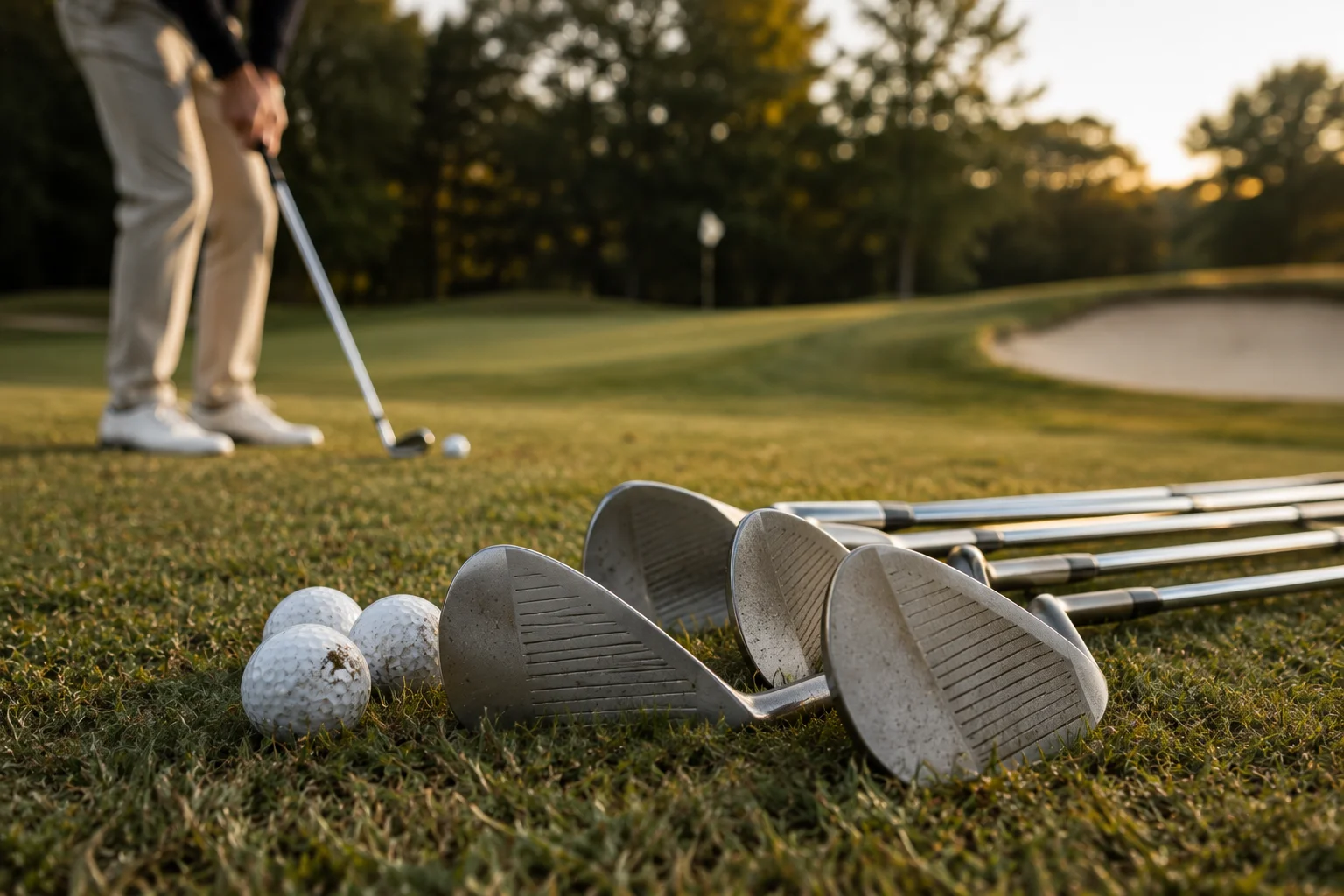
Wedges deserve more attention than they often receive.
Think about the shots you face inside 100 yards.
If your pitching wedge goes 120 yards and your sand wedge goes 85, what happens at 100?
That's where another wedge can become useful.
A typical setup could include:
Pitching wedge
Gap wedge
Sand wedge
Lob wedge
But you don't need all four.
A golfer who rarely opens the clubface may find a lob wedge unnecessary. Someone who plays courses with lots of bunkers or firm greens may value one considerably more.
American Golf's wedge selection can help you compare lofts and designs when you're trying to close those scoring gaps.
Which putter should you buy?
The best putter is the one that suits your stroke, alignment preferences, setup and feel rather than simply the most expensive model.
The putter is often the most personal club in the bag.
Blade putters offer a traditional appearance.
Mallets can provide additional stability and alignment features.
There are also many variations between those two categories.
Stand over the ball and look down.
Does the alignment feel natural?
Does the head look comfortable behind the ball?
Can you start the ball on your intended line?
Those questions matter more than the name on the head.
American Golf's putter selection gives you the opportunity to explore different head shapes and technologies before settling on one.
Which golf balls belong in your bag?
Choose golf balls based on feel, launch, spin, distance, durability and budget rather than assuming a premium tour ball is automatically the right choice.
Golf balls are easy to overlook because they're consumables.
But they have a significant effect on your game.
A player who regularly loses balls may not benefit financially from using the most expensive model available. Meanwhile, a more experienced golfer may value particular greenside spin and feel characteristics.
The most important thing is consistency.
Once you've found a ball that suits your game, sticking with it makes it easier to understand how you actually perform.
American Golf's golf ball range makes it straightforward to compare different types and price points.
Do you need a GPS or rangefinder?
GPS devices and rangefinders can make club selection more informed by providing accurate distance information, particularly on unfamiliar courses.
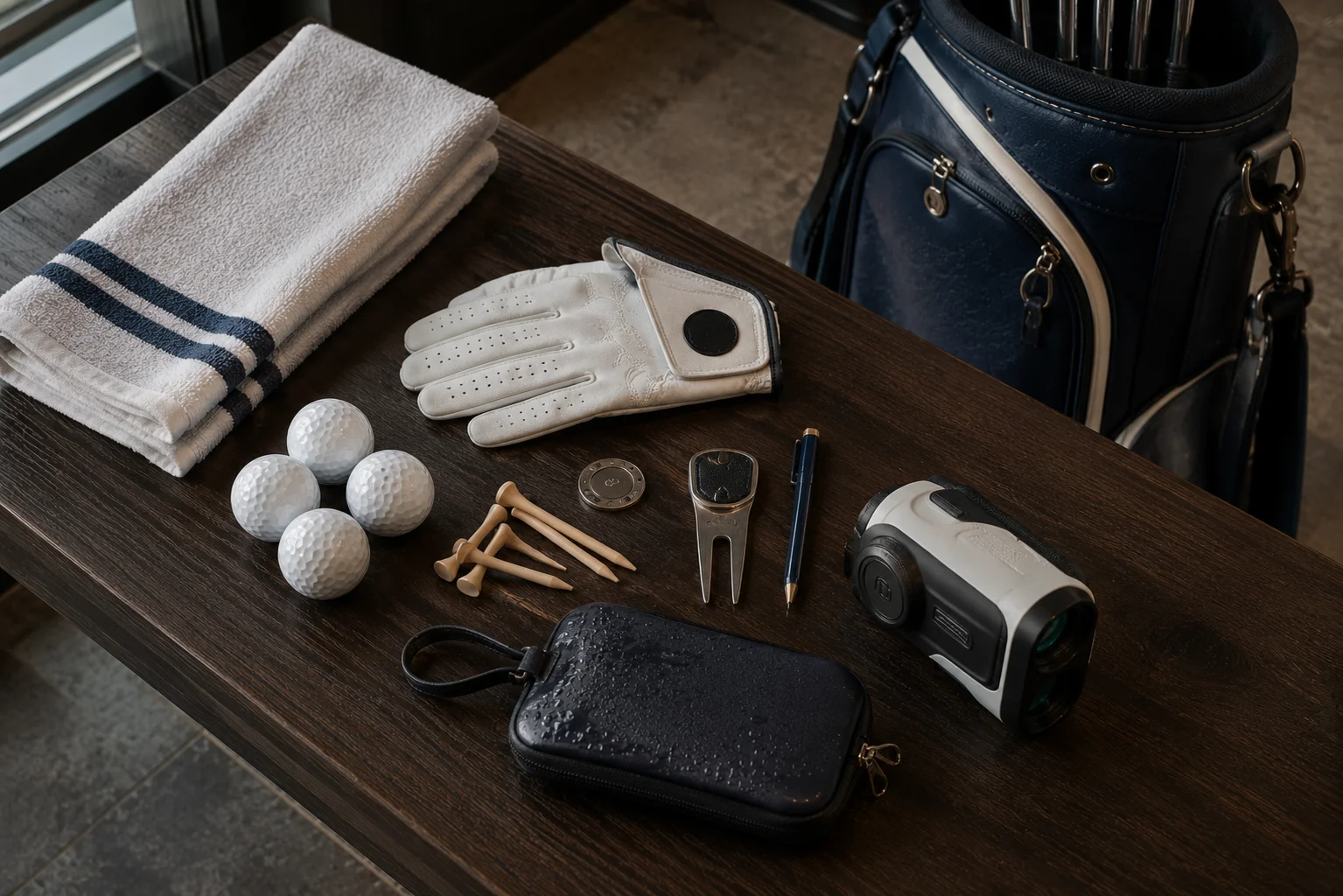
You don't need technology to play good golf.
But good distance information can remove unnecessary guesswork.
A GPS can show broader course information and hazards.
A rangefinder can provide precise distances to specific targets.
Neither tells you what club to hit.
That's still your decision.
Wind, elevation, lie and course conditions remain important.
The technology simply gives you better information from which to make that decision.
American Golf's golf technology selection is worth exploring if you're looking to add distance measurement or other performance tools to your setup.
Why is a golf glove an essential?
A properly fitting golf glove helps provide a secure grip and can improve comfort during a long round.
It's one of those purchases that doesn't feel particularly exciting.
Until you forget it.
A glove should feel secure without being painfully tight. The fingers shouldn't have excessive material at the ends, and the palm should sit comfortably against the grip.
Carry a spare if you play regularly.
Weather can also change which glove works best, so golfers who play year-round may eventually want different options for different conditions.
American Golf's golf glove selection makes it easy to add a spare or compare materials and designs.
Why should every golfer carry a towel?
A golf towel keeps clubfaces, balls and hands clean and dry, helping you maintain consistent equipment contact throughout the round.
This is a tiny accessory that earns its place.
Grass and moisture on a clubface can affect contact.
A wet grip can become uncomfortable.
A dirty golf ball can also make cleaning worthwhile before a shot.
You don't need anything elaborate.
Just keep a practical towel attached to your bag where you can reach it easily.
American Golf also carries the smaller golf accessories that tend to get forgotten until you're already standing on the first tee.
What other golf bag accessories are worth carrying?
Tees, ball markers, divot tools, spare gloves and weather protection are among the most useful additions to a properly prepared golf bag.

Keep the basics together rather than throwing them randomly into every pocket.
A sensible accessory kit includes:
Tees
Ball markers
Divot repair tool
Spare glove
Towel
Waterproof valuables pouch
Pencil
Rain hood
You can add more depending on how you play.
But be careful.
Golf bags become surprisingly heavy when every possible accessory gets added.
How should you organise your golf bag?
Organise clubs by type and keep frequently used accessories in easily accessible pockets so that everything has a predictable place.
Put your woods in the larger compartments.
Arrange irons in an order that makes sense to you.
Keep wedges together.
Give the putter an easily accessible position.
Balls, tees and gloves should go into separate pockets.
And keep valuables somewhere protected.
It sounds basic, but good organisation becomes noticeably more valuable when you're playing in rain, walking quickly between shots or trying to find something while your group is waiting.
How should beginners build a golf bag?
Beginners should prioritise forgiving clubs, sensible distance coverage and essential accessories rather than immediately buying a highly specialised 14-club setup.
You don't need to build the bag of a tour professional.
Start with:
Driver
Fairway wood or hybrid
Mid-to-short irons
Wedges
Putter
Balls and gloves
Towel and tees
Then learn what you actually use.
As your swing improves, you'll understand where the gaps are.
Maybe you need another wedge.
Maybe your hybrid is replacing a long iron.
Maybe your driver needs a fitting.
Build from evidence rather than assumptions.
American Golf is useful for this gradual approach because you can revisit different equipment categories as your game develops.
How should experienced golfers upgrade their golf bag?
Experienced golfers should upgrade clubs where there is a measurable performance or fitting benefit rather than replacing equipment simply because a newer model has launched.

This is where a little restraint can save a lot of money.
If your driver is performing well, keep it.
If your wedges are worn, replace them.
If your iron distances have changed, investigate the gaps.
If your putting has become inconsistent, try different putter designs.
And if you've never had your clubs properly fitted, that may be a more worthwhile investment than simply buying another new club.
American Golf's combination of equipment and fitting services makes it possible to approach upgrades as a process rather than an impulse purchase.
What makes a golf bag setup genuinely good?
A good golf bag has clear distance gaps, clubs you can hit confidently and only the accessories that genuinely improve your round.
Take each club out.
Ask one simple question:
What shot is this club here to play?
If you have a clear answer, excellent.
If two clubs perform almost the same job, investigate the overlap.
If one club consistently creates difficult shots, consider whether there's an easier alternative.
The best golf bag isn't necessarily the most impressive one.
It's the one that makes the next shot easier.
Golf Bag Essentials FAQs
How many clubs can you carry?
The Rules of Golf allow a maximum of 14 clubs during a round. You can carry fewer if you prefer.
What clubs should every golfer have?
A basic setup normally includes a driver, fairway wood or hybrid, irons, wedges and putter.
Do beginners need 14 golf clubs?
No. Beginners can start with a simpler setup and add clubs as they understand their distance gaps and playing style.
Should I carry a hybrid?
A hybrid can be particularly useful if you struggle with long irons, although the right choice depends on your swing and distances.
How many wedges do I need?
Most golfers benefit from enough wedges to create sensible distance gaps around the scoring area. Two or three wedges beyond the set's pitching wedge can be appropriate depending on the golfer.
Do I need a golf rangefinder?
No, but accurate distance information can make club selection and course management easier.
How many golf balls should I carry?
Carry enough for the round plus several spares. Golfers who frequently lose balls should carry more.
What are the most important golf accessories?
A towel, gloves, tees, ball markers and a divot tool are useful basics. A GPS or rangefinder can also be valuable.
Should I get fitted for golf clubs?
Custom fitting can be particularly worthwhile when buying expensive clubs because loft, shaft and other specifications can be matched more closely to your swing.
Final Thoughts
Building the right golf bag in 2026 is less about owning everything and more about creating a setup that makes sense.
Start with the essentials: driver, fairway wood or hybrid, irons, wedges and putter. Then look carefully at your distance gaps. Add suitable balls, a glove, towel and tees before deciding whether GPS technology or other accessories would genuinely help.
Most importantly, don't copy somebody else's bag blindly.
Your swing is different.
Your distances are different.
Your course is different.
That's why American Golf can be useful when building or refining a setup: you can compare clubs, balls, technology and accessories across the categories that actually matter to your game.
Explore golf clubs, balls and accessories at American Golf
A great golf bag doesn't need to be complicated.
It just needs to be deliberate.

Written By
Leon Hoffmann
Travel Content Strategist - 10+ years creating travel guides, booking advice and transportation content.