
This article contains affiliate links. If you purchase through these links, we may earn a commission at no additional cost to you. This helps support our website and allows us to continue creating free content. Our recommendations are based on our independent research and editorial standards.
Choosing clothes by colour and silhouette is easy.
Choosing them by fabric is where a wardrobe starts to become genuinely useful.
A beautiful sweater can still be the wrong choice if it makes you too warm. A crisp linen shirt can look perfect but feel impractical for a cold day. And while cashmere feels wonderfully soft, you probably do not want your entire wardrobe made from it.
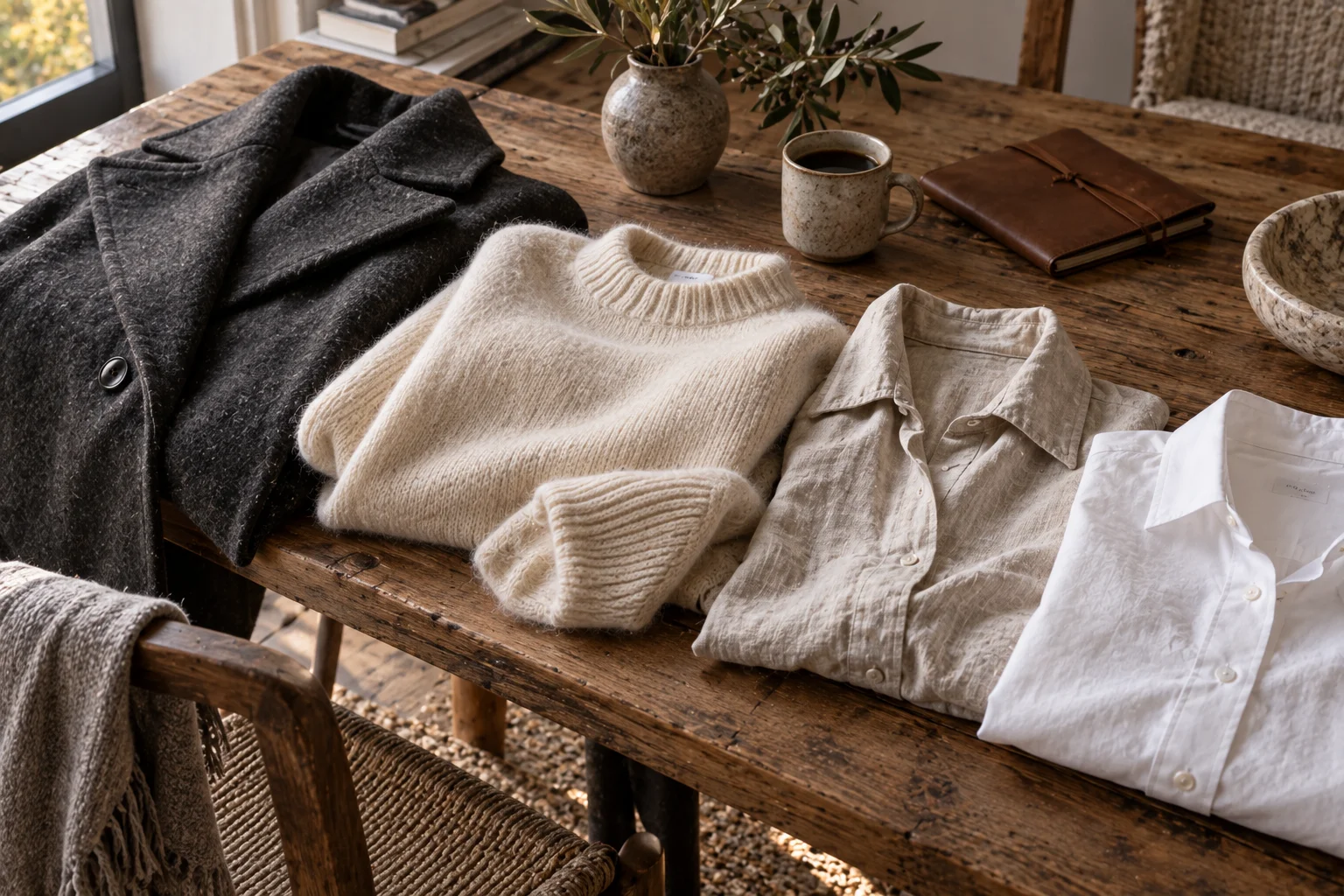
The four fabrics that come up again and again are wool, cashmere, linen and cotton. Each has a different job.
Wool is the strongest all-round cold-weather option, cashmere is about softness and luxury, linen is excellent for warm weather, and cotton is the most versatile everyday fabric.
ARKET is particularly useful for comparing them because its current collections include wool and wool blends, pure cashmere, linen and linen blends, and a wide range of cotton clothing. The brand says cotton accounts for roughly 60 percent of the materials used across its collections, while its autumn 2026 assortment adds its first garments made with soilless cotton.
Which fabric is best for different situations?
There is no single best fabric. The right choice depends on temperature, how you wear the garment and how much maintenance you are willing to give it.

Fabric | Best for | Main advantage | Main drawback |
|---|---|---|---|
Wool | Autumn and winter | Warm, breathable and durable | Can require careful washing |
Cashmere | Premium knitwear | Exceptionally soft and lightweight | More delicate and prone to pilling |
Linen | Summer and warm weather | Breathable and naturally relaxed | Wrinkles easily |
Cotton | Everyday wear | Versatile and easy to style | Less insulating than wool |
The interesting part is that a good wardrobe needs more than one of these.
A cotton shirt can be worn almost all year. Wool takes over when temperatures fall. Linen becomes useful when the weather gets hot. Cashmere sits somewhere between practicality and luxury.
Why is wool so useful?
Wool is one of the most versatile natural fibres because it combines warmth with breathability and durability.
ARKET's own wool care guide notes that merino wool, lambswool, mohair, alpaca and cashmere are valued for warmth and durability, while wool can also be breathable, moisture-wicking and resistant to odours and wrinkles.
That makes wool particularly useful for coats, sweaters, cardigans, trousers and other cold-weather layers.
It also means you do not necessarily need an extremely heavy garment to stay comfortable.
A fine merino knit under a coat can be surprisingly effective, while a heavier wool jumper can become the main layer.
ARKET's current collection includes pieces such as the Merino Wool Cardigan, Wool-Blend Blazer, Wool-Blend Coat and Wool-Alpaca Blend Coat, showing how widely the material is used across the wardrobe.
When should you choose merino wool?
Choose merino when you want the benefits of wool in a lighter, more versatile layer.

Merino works particularly well for knitwear that needs to sit close to the body without feeling overly bulky.
It can also be useful for layering because it provides warmth without automatically making the whole outfit heavy.
ARKET currently lists a Merino Wool Mock-Neck Top among its women's new arrivals, along with a Merino Wool Cardigan elsewhere in the current collection.
That makes merino a good bridge between a simple T-shirt and a heavy winter jumper.
Is cashmere worth paying more for?
Cashmere is worth considering when softness, comfort and a more luxurious feel matter more than rugged everyday durability.
ARKET describes cashmere as one of the rarest wool fibres and highlights its exceptional softness. It also warns that cashmere is prone to pilling in areas that experience more abrasion and recommends gentle care.
That gives you a good idea of where cashmere fits.
It is not necessarily the best fabric for the clothes you wear hardest.
It is better for the jumper you want to wear when you care about feel and finish: over a shirt for dinner, under a coat on a cold day or simply at home when comfort matters.
ARKET's current women's collection includes Pure Cashmere Jumpers, Oversized Pure Cashmere Jumpers and Pure Brushed-Cashmere Jumpers, while its men's collection includes cashmere knitwear and accessories.
What is the difference between wool and cashmere?
Cashmere is a type of animal fibre from certain goats, while wool usually refers to fibres from sheep and several other animals.

The practical difference is what you tend to notice when wearing them.
Wool is generally the more rugged and versatile choice.
Cashmere is prized for its softness and luxurious hand feel.
That does not mean cashmere is always warmer or that every wool garment feels coarse.
Modern wool can be extremely soft, especially fine merino and carefully finished blends.
The better way to think about it is:
Wool for versatility. Cashmere for softness and refinement.
Why is linen so good in summer?
Linen is one of the best choices for hot weather because it is breathable and becomes softer with use.
ARKET's current linen care guide describes linen as a strong natural fibre that gets softer over time and has a breathable, soft texture.
That makes it particularly useful for shirts, trousers, relaxed blazers, dresses and summer tailoring.
There is also a visual advantage.
Linen has a naturally relaxed texture, so even a simple shirt can look more interesting than a perfectly smooth cotton version.
ARKET's current collection includes Linen Shirts, Linen-Blend Collarless Blazers, linen trousers and other linen-blend garments.
Is linen supposed to wrinkle?
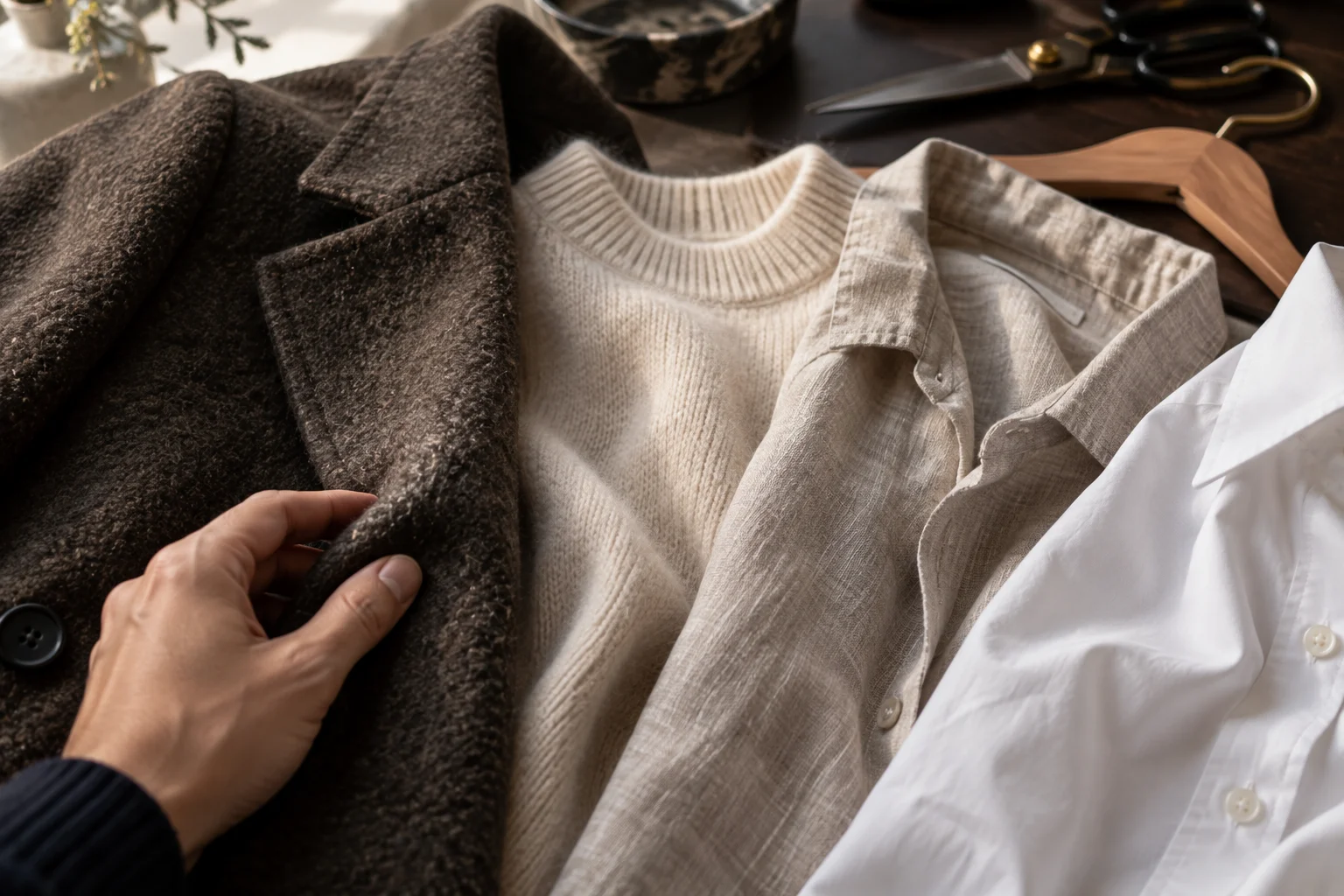
Yes. Wrinkling is one of linen's defining characteristics rather than automatically a sign that the garment is poorly made.
The trick is to decide whether you like that look.
A completely pressed linen shirt can look polished, but linen's slight creasing is part of what gives it its relaxed summer character.
ARKET recommends air drying linen where possible and notes that ironing while the garment is slightly damp can make smoothing easier.
If you want a fabric that stays perfectly crisp all day, linen may frustrate you.
If you like relaxed dressing, those wrinkles can be part of the appeal.
Why is cotton the everyday wardrobe staple?
Cotton is the easiest all-round fabric for everyday clothing because it can be made into everything from lightweight jersey to shirts, trousers and heavier canvas.
ARKET describes cotton as the world's most widely used natural fibre and says that how it is spun, woven or finished can turn it into crisp poplin, fine jersey, sturdy canvas and soft flannel.
That versatility explains why cotton appears in so many wardrobes.
A cotton T-shirt works under tailoring.
A cotton poplin shirt works at the office.
Cotton trousers can sit somewhere between casual and polished.
A heavier cotton jacket can become an outer layer.
ARKET currently carries Signature T-Shirts, Cotton Poplin Shirts, Cotton Cardigans, Barrel-Leg Cotton Trousers and cotton workwear pieces.
Which fabric is easiest to care for?
Cotton is generally the easiest starting point, while wool and cashmere usually reward gentler care and linen needs some attention if you want to preserve its appearance.

Always follow the individual care label because fibre blends and garment construction can change the instructions.
ARKET recommends avoiding frequent washing for wool knitwear, avoiding tumble drying and laying garments flat to dry.
For cashmere, the brand advises against washing too frequently and recommends gentle handling because of the fibre's delicacy.
Linen can be hand or machine washed according to the garment's instructions, with low temperatures particularly useful for darker colours.
The takeaway is simple: better fabric does not necessarily mean easier fabric.
Which fabric lasts the longest?
Durability depends on the specific garment, weave, fibre quality and how it is treated, so there is no universal winner.
Wool has a strong reputation for durability and resilience, and ARKET specifically notes durability among the qualities associated with wool.
Linen is also a strong natural fibre and can become softer with use.
Cotton ranges from very delicate jersey to extremely robust canvas.
Cashmere sits on the more delicate end and can show pilling, particularly where there is friction from bags, jewellery or repeated wear.
The fabric label tells you something.
The construction tells you much more.
Which fabric should you wear in winter?
Start with wool, then add cashmere when you want extra softness or a more luxurious layer.
A sensible cold-weather combination might be a cotton base layer, merino jumper and wool coat.
Cashmere can replace the merino layer when you want a softer, lighter knit.
ARKET's current autumn assortment makes this easy to build, with merino, wool, alpaca-wool and pure cashmere appearing across the collection.
You do not need a wardrobe made entirely from expensive fibres.
One excellent cashmere jumper and a few dependable wool layers can go a long way.
Which fabric should you wear in summer?
Choose linen when maximum breathability and a relaxed look are priorities, and cotton when you want something easier and more familiar.
A linen shirt is excellent for hot days.
A cotton T-shirt is easier for everyday wear.
A cotton-poplin shirt provides a crisper option when you want to look more polished.
You can also combine them.
A cotton T-shirt under a linen overshirt gives you the comfort of both without making the outfit complicated.
Which fabric looks the most expensive?
The way a garment is cut and finished matters more than simply choosing the most luxurious fibre.
Cashmere has an obvious premium association because of its softness and rarity.
But a well-structured wool coat can look more sophisticated than an inexpensive cashmere jumper with poor proportions.
Likewise, good linen tailoring can look exceptionally elegant without trying to imitate formal luxury.
ARKET's current collections are built around this combination of material and shape, with contemporary classics ranging from wool tailoring and cashmere knitwear to linen blazers and cotton wardrobe staples.
Should you choose pure fabric or a blend?
A blend can sometimes be more practical than a pure fibre because it combines different characteristics.

For example, a wool blend can provide warmth while changing the texture, weight or structure of the garment.
Linen blends can reduce some of linen's tendency to crease while retaining part of its lightweight character.
Cotton blends can add stretch or improve shape retention.
That is why the percentage composition deserves attention.
"100 percent" is not automatically better. It simply tells you that one fibre dominates the garment.
How much of each fabric should your wardrobe have?
For a balanced wardrobe, cotton should probably make up the largest everyday share, followed by wool, with linen and cashmere filling more specific roles.
A practical wardrobe might look something like this:
Cotton: T-shirts, shirts, everyday trousers and casual layers.
Wool: Jumpers, cardigans, blazers and coats.
Cashmere: One or two premium knitwear pieces.
Linen: Summer shirts, trousers and relaxed tailoring.
You can then add blends depending on your climate and lifestyle.
This approach is more useful than trying to choose one "best" fabric for everything.
Which ARKET pieces show these fabrics best?
ARKET's current assortment gives you practical examples across all four categories.
For wool, look at the Wool-Blend Coat, Wool-Blend Blazer, Merino Wool Cardigan and wool-tailored trousers.
For cashmere, the Pure Cashmere Jumper and Oversized Pure Cashmere Jumper are current options.
For linen, ARKET currently offers Linen Shirts and Linen-Blend tailoring.
For cotton, look at the Signature T-Shirts, Cotton Poplin Shirt and Barrel-Leg Cotton Trousers.
The value of shopping this way is that you start with the material suited to the job instead of starting with a trend.
What ARKET offers and promotions are currently available?
ARKET's official site currently has several ways to save when building a wardrobe around these materials.
ARKET currently offers 10 percent off a first purchase when you subscribe to its newsletter and SMS marketing.
The brand also offers 14 percent off full-price and discounted items to verified students across its markets, although the student discount cannot be combined with other code-based discounts.
ARKET's Previous Collections section currently contains selected reduced-price clothing, including linen shirts, cotton pieces, knitwear and other wardrobe staples.
The main sale section is also live on the ARKET site, while individual products can be marked as excluded from offers, so it is worth checking the product page before assuming a particular item qualifies.
Wool, Cashmere, Linen and Cotton FAQs
Which fabric is best for everyday clothes?
Cotton is usually the easiest all-round choice because of its versatility. Wool becomes more useful when you need warmth, while linen and cashmere are more specialised.
Is wool better than cashmere?
Not necessarily. Wool is generally more versatile and durable, while cashmere is prized for softness and a more luxurious feel.
Is cashmere worth the money?
It can be, particularly when softness and comfort are priorities. However, cashmere is more delicate and needs careful handling.
Is linen good for hot weather?
Yes. Linen is breathable and is well suited to warm-weather shirts, trousers and relaxed tailoring.
Why does linen wrinkle so easily?
Linen has a relatively relaxed character and wrinkles naturally with wear. Proper washing, drying and light steaming or ironing can keep it looking more controlled.
Is cotton good for winter?
It can be useful as a base layer, but it is generally less suitable than wool when your main goal is insulation.
Which fabric is the most durable?
There is no universal winner. Wool and linen can be very durable, cotton ranges from delicate to extremely robust, and cashmere requires more careful handling.
What fabric looks most luxurious?
Cashmere has an obvious luxury association, but the quality of construction, fit and finishing often matters more to the final appearance than the fibre alone.
Can you wear wool in spring?
Yes. Lightweight wool and merino are particularly useful during transitional weather when a heavy winter coat is unnecessary.
Does ARKET sell all four fabrics?
Yes. ARKET's current collections include cotton, wool and wool blends, pure cashmere, linen and linen blends across its clothing ranges.
Final Thoughts
There is no fabric that deserves to win every season.
Cotton is the dependable everyday choice. Wool handles cold weather exceptionally well. Cashmere adds softness and a more luxurious feel. Linen is at its best when temperatures rise.
The smartest wardrobe therefore uses all four rather than trying to replace one with another.
ARKET's current collections make that approach particularly easy. You can build around cotton T-shirts and shirts, add linen for summer, bring in merino and wool as the temperature drops, and keep cashmere for the pieces where comfort and softness matter most.
ARKET is also currently offering 10 percent off a first purchase through newsletter and SMS signup, 14 percent off for verified students, and reduced prices across selected previous collections.
The bigger lesson is not to ask which fabric is best.
Ask which fabric is best for this garment, this season and the way I actually live.
Once you start shopping that way, buying clothes becomes much less about collecting pieces and much more about building a wardrobe that works.

Written By
Samuel Green
Career Content Specialist — 10+ years covering recruitment and career development.