
This article contains affiliate links. If you purchase through these links, we may earn a commission at no additional cost to you. This helps support our website and allows us to continue creating free content. Our recommendations are based on our independent research and editorial standards.
Overview
Choosing an email marketing platform is rarely just about finding the lowest monthly price. The better question is whether the platform gives you the tools, sending capacity, automation, reporting, and customer management features you actually need.
That is why comparing the Brevo Free plan with its paid options is useful for businesses at different stages. A freelancer building an audience has very different requirements from an ecommerce company sending thousands of messages every month. A growing marketing team may need advanced automation and reporting, while a larger organization may care more about collaboration, security, data management, and dedicated support.
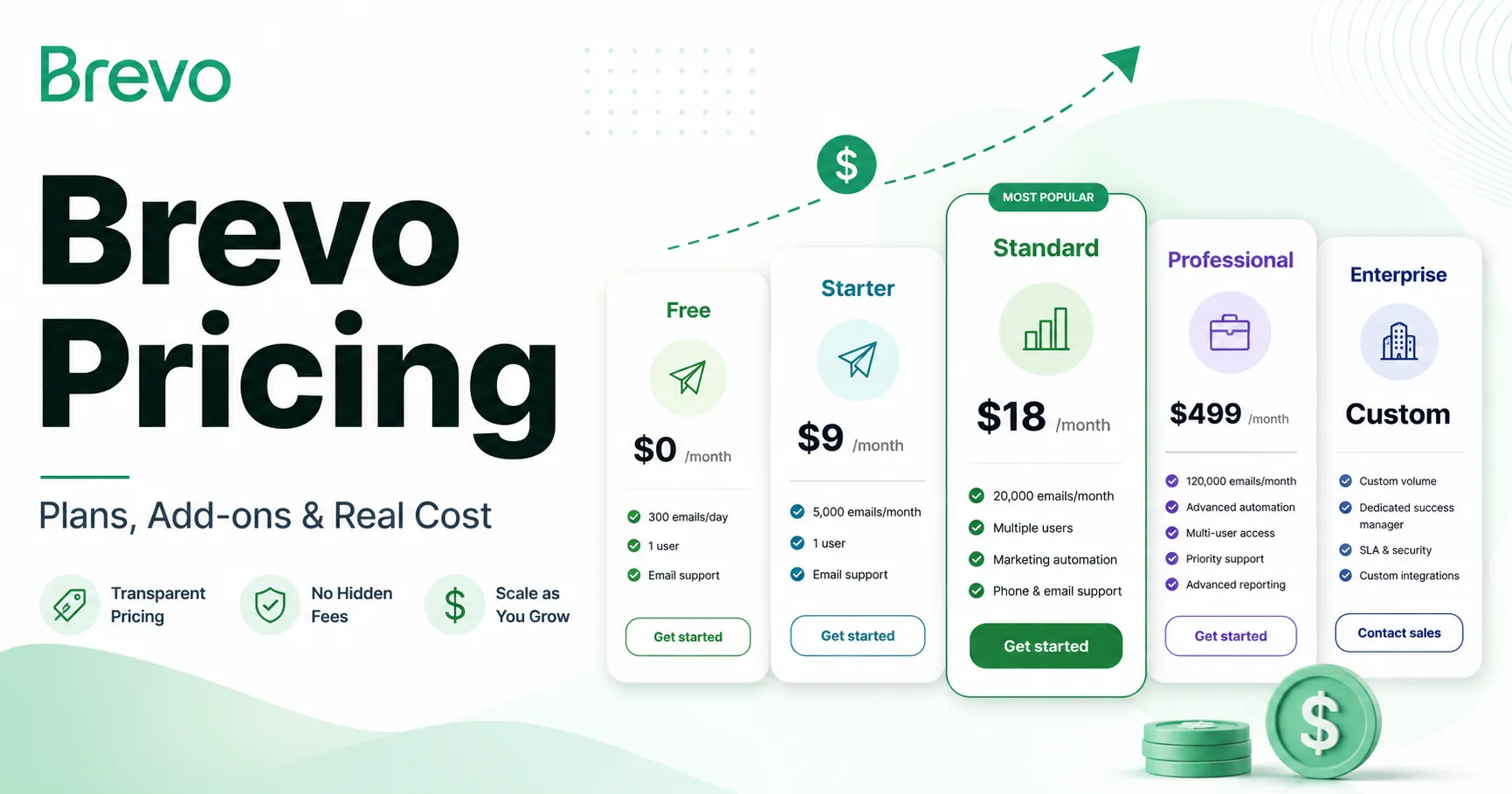
Brevo approaches this progression with five main plans: Free, Starter, Standard, Professional, and Enterprise. The Free plan costs nothing and can be used without a time limit, while paid plans introduce higher sending volumes and additional marketing, automation, reporting, collaboration, and enterprise capabilities.
The right choice therefore depends less on choosing the most powerful option and more on choosing the level that fits your current operation.
What Does Brevo Offer?
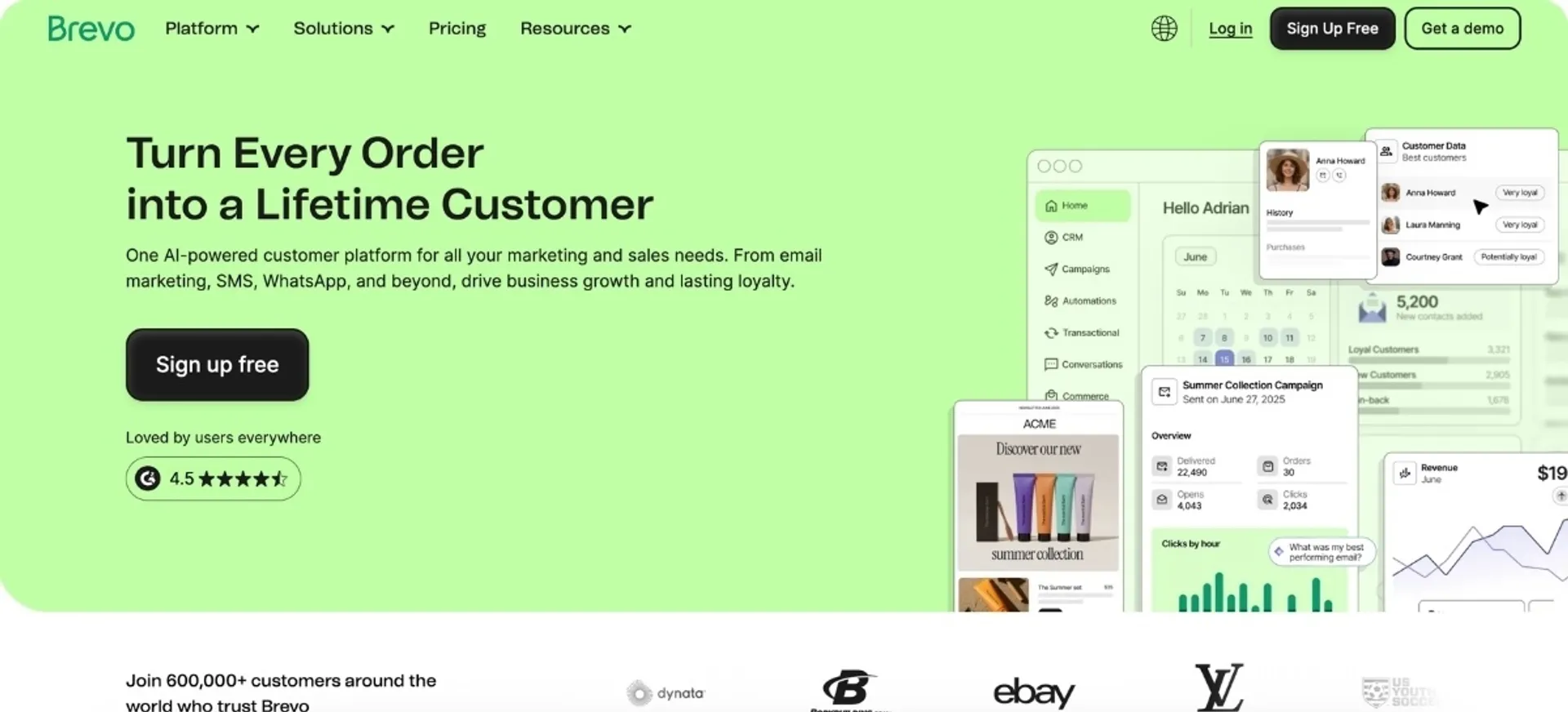
Brevo is designed as a broader customer engagement platform rather than simply an email sending service. Its product ecosystem includes email marketing, SMS, WhatsApp, transactional messaging, marketing automation, contact management, sales tools, conversations, and customer data capabilities.
That broader approach is important when comparing plans because the value of an upgrade may come from a combination of features rather than from email volume alone.
For example, a small business might initially need only email campaigns and contact management. Once its audience grows, automation could become more important. Later, advanced reporting, landing pages, additional users, or more sophisticated customer journeys might justify another step up.
Think of it like choosing luggage for a trip. A small carry on is perfectly practical for a weekend away. It does not make sense to buy a large suitcase simply because it can hold more. But if you are travelling for several weeks, the additional capacity becomes useful.
The same principle applies when selecting a Brevo subscription.
Brevo Free Plan: A Strong Starting Point
The Free plan is designed for individuals who want to explore the platform and begin building an online presence. It costs $0 per month and has no time limit. It includes up to 100,000 stored contacts, but email sending is limited to 300 sends per day.
For someone starting a newsletter, testing a small business idea, or learning how email marketing works, this can be a practical way to begin without immediately committing to a paid subscription.
The Free plan includes a drag and drop email editor, custom email templates, reusable sections, basic reporting, email and SMS campaigns, transactional email and SMS, marketing automation for up to 2,000 unique contacts entering active automations, and free sales features. It also includes one user seat.
There are important limits to understand. The 300 email sends are a daily allowance, and unused sends do not carry forward. The Free plan also includes basic statistics rather than the more advanced reporting available with higher plans. WhatsApp, landing pages, A/B testing, and several other capabilities are not included.
For a new business, these limitations may not matter at all.
If your mailing list is still small and you are sending occasional campaigns, the Free plan can give you plenty of room to experiment.
When Should You Move Beyond Free?
The first sign that you need a paid plan is not necessarily a desire for more features. It may simply be that the way you communicate with customers has become more demanding.
Suppose you run a small online clothing store. At first, you send one newsletter each week to a few hundred subscribers. The Free plan may be sufficient.
A few months later, your audience grows, you begin promoting new collections more frequently, and you want your campaigns to reach more people on the same day. The 300 daily email limit becomes more relevant.
This is where Starter can make sense.
The current Starter plan starts at $9 per month and provides email sending without the Free plan's daily sending limit. The available tiers are based on monthly email volume and contact storage. Starter also adds features such as web push notifications, global data feeds, a conversion metric, and optional removal of Brevo branding.
For many smaller businesses, this can represent a sensible transition from experimenting with marketing to running it more consistently.
Brevo Starter: For Growing Email Marketing
Starter is aimed at individuals and smaller operations that are beginning to take email and multichannel marketing more seriously.
The most meaningful difference is sending capacity. Instead of working around the Free plan's 300 email sends per day, businesses select a monthly email volume. Current Starter tiers begin at 5,000 emails per month, with higher tiers available as sending requirements increase. Contact storage also varies according to the selected email tier.
This structure makes Starter attractive for a business whose audience is growing but whose marketing operation remains relatively straightforward.
Imagine a consultant with 1,200 subscribers who sends two newsletters every month, along with occasional promotional or educational campaigns. The Free plan might work initially, but the ability to plan monthly email volume without the daily Free limit can make the paid option more convenient.
Starter also supports web push notifications and global data feeds, which can become useful when a business begins connecting marketing activity with external data sources.
One detail worth remembering is that SMS credits are sold separately. Brevo's current pricing documentation also lists optional add ons for additional capabilities, so businesses should look at the complete cost of their intended setup rather than judging a plan solely by its headline subscription price.
Brevo Standard: Where Marketing Becomes More Sophisticated
For many growing businesses, Standard is likely to be the most important upgrade to evaluate.
The current Standard plan starts at $18 per month. It includes the Starter features while adding capabilities such as A/B testing, advanced reporting and analytics, AI send time optimization, one landing page, and marketing automation for unlimited contacts.
That automation difference can be significant.
Consider a business that has several thousand subscribers and wants different customers to receive different follow up messages based on their activity. A simple newsletter strategy can gradually become difficult to manage manually. More sophisticated automation can help create structured customer journeys instead.
Standard also increases web push capacity and introduces additional collaboration options, with up to three marketing seats available through an add on.
The reporting capabilities are another reason a growing business might consider Standard. As campaigns become more important to revenue, basic statistics may no longer provide enough insight for a marketing team that wants to understand performance in greater detail.
Brevo Professional: For Larger Marketing Operations
Professional is positioned for marketing teams running high volume, multichannel campaigns at scale.
The current Professional plan starts at $499 per month and supports monthly email volumes ranging from 150,000 to 10 million, with storage for up to 2 million contacts. It also includes ten user seats and advanced capabilities such as personalized data feeds, AI product recommendations, marketing pressure management, AI segmentation, contact scoring, analytics dashboards, and additional push notification capabilities.
Professional also expands WhatsApp capabilities, including WhatsApp campaigns and transactional messaging. It introduces additional landing pages, custom objects, inbound webhooks, and more advanced data and reporting functionality.
This is the kind of plan where the decision should be based on operational requirements rather than curiosity about premium features.
If your organization sends hundreds of thousands or millions of emails, needs several team members working inside the platform, relies on sophisticated segmentation, or requires more advanced data capabilities, Professional becomes much easier to justify.
Brevo Enterprise: For Complex Organizations

Enterprise is designed for organizations that need a more tailored customer engagement environment.
Pricing is customized rather than presented as a standard monthly starting price. The plan adds capabilities such as unlimited user seats, sub organization management, advanced data capabilities, data warehouse and SFTP functionality, SAML single sign on, service level agreements, dedicated support, and unlimited contact storage.
For a large organization, these features can be more important than simply increasing email volume.
Imagine a company with several regional teams, complex data infrastructure, strict access requirements, and multiple customer communication programs. The question is no longer simply how many emails can be sent. It becomes a question of governance, collaboration, security, data management, and organizational scale.
That is where Enterprise is intended to fit.
How to Choose the Right Brevo Plan
The easiest way to choose is to look at your actual marketing operation today.
If you are testing email marketing, have modest sending requirements, and work alone, Free can be an excellent starting point.
If you need more consistent sending capacity and are beginning to use multichannel marketing, Starter deserves consideration.
If automation, advanced analytics, A/B testing, landing pages, and larger customer journeys are becoming important, Standard is a logical next step.
If your organization operates at substantial email volume and needs advanced segmentation, analytics, data functionality, multiple users, and broader multichannel capabilities, Professional may be more appropriate.
Enterprise is aimed at organizations with complex operational and technical requirements that benefit from customized solutions and additional organizational controls.
It is also worth remembering that you do not necessarily need to make a permanent decision on your first day. Brevo allows customers to upgrade when they need additional features or reach plan limits.
Consider Add Ons Before Changing Plans
Another useful part of the pricing structure is the availability of add ons.
Brevo offers optional extras including prepaid email credits, prepaid SMS credits, prepaid WhatsApp credits on eligible plans, additional marketing seats, dedicated IP options, and other services depending on the subscription level.
This gives businesses another way to shape their account around actual requirements.
For example, a company that sends occasional large campaigns may prefer prepaid email credits rather than immediately moving to a much larger recurring email allowance. Brevo states that prepaid email credits do not expire and can be used when needed.
The lesson is simple: review the plan and add on combination before assuming that the next major subscription level is automatically the best value.
Final Verdict
There is no single best Brevo plan for every business.
The Free plan is particularly useful for getting started and understanding the platform without a financial commitment. Starter is a natural progression when email activity becomes more consistent. Standard becomes more compelling when automation, testing, reporting, and larger customer journeys matter. Professional is built for substantial marketing operations, while Enterprise addresses the needs of larger organizations with complex requirements.
The most sensible choice is therefore the plan that solves your current problems without forcing you to pay for capabilities you are unlikely to use.
For many new users, starting with Free and upgrading when genuine requirements emerge is a straightforward approach. For established marketing teams, comparing sending volume, automation needs, reporting requirements, collaboration, and multichannel communication will provide a much clearer answer than simply looking at the monthly price.
Frequently Asked Questions
Is the Brevo Free plan really free?
Yes. Brevo states that its Free plan has no time limit and does not require a paid subscription. It includes 300 email sends per day and allows storage for up to 100,000 contacts.
What is the cheapest paid Brevo option?
The current Starter plan starts at $9 per month. Pricing can vary according to the selected monthly email volume and associated contact storage tier.
Does Brevo Free have an email sending limit?
Yes. The Free plan allows 300 email sends per day. Unused daily sends do not carry over to another day.
Which Brevo option is best for automation?
It depends on the size and complexity of the automation program. Free and Starter allow up to 2,000 unique contacts to enter active automations, while Standard provides marketing automation for unlimited contacts.
Does Brevo support WhatsApp?
Yes. WhatsApp functionality is available within the platform, although the specific capabilities and credit options depend on the subscription level. Professional and Enterprise include WhatsApp campaigns and transactional messaging, while prepaid WhatsApp credits are available as an add on on eligible plans.
Can I upgrade my Brevo subscription later?
Yes. Brevo allows users to upgrade when they need additional features or reach the limits of their current plan.
Is Standard better than Starter for a growing business?
Standard can be more suitable when a business needs advanced reporting, A/B testing, AI send time optimization, landing pages, and automation for unlimited contacts. Starter can remain a sensible choice when the business mainly needs higher email capacity and a relatively straightforward marketing setup.
Should a small business start with Brevo Free?
For many small businesses, yes. If the business is still building its audience and the 300 daily email limit is sufficient, Free provides an opportunity to learn the platform before committing to a paid subscription. As marketing requirements grow, upgrading can be considered based on actual needs rather than assumptions.
Written By