
This article contains affiliate links. If you purchase through these links, we may earn a commission at no additional cost to you. This helps support our website and allows us to continue creating free content. Our recommendations are based on our independent research and editorial standards.
Overview
Getting a customer to make a first purchase is an important milestone for any online store. But for many brands, the more valuable opportunity begins after the order has been completed.
A customer who has already purchased knows the brand, understands the buying process, and has experienced the product. If that experience was positive, the next purchase can feel much more natural than convincing a completely new shopper to buy for the first time.
The challenge is staying relevant without becoming intrusive.
This is where Brevo can play an important role. Its customer engagement platform brings together email marketing, marketing automation, SMS, WhatsApp, transactional messaging, contact management, and sales capabilities. For online retailers, these tools can help create personalized customer journeys that continue beyond the checkout page.
A good repeat purchase strategy is not about sending customers constant promotions. It is about understanding what they bought, recognizing when they may need something again, and giving them a useful reason to return.
For example, imagine someone orders skincare products before going on holiday. A store could send an order confirmation, follow up with product guidance, provide useful care advice, and eventually introduce complementary products that genuinely fit the original purchase. The communication feels more like helpful service than advertising.
That is the kind of customer relationship Brevo can help businesses build.
Why Repeat Purchases Matter
Acquiring a new customer requires effort. A business needs to attract attention, communicate its value, overcome uncertainty, and encourage someone who may have never interacted with the brand to make a purchase.
Existing customers start from a different position.
They have already taken that first step.
This makes post purchase communication particularly important. A customer who receives useful information after buying may have a stronger reason to remember the brand when they need another product.
However, repeat purchases should never be treated as automatic. Someone who buys once is not necessarily ready to buy again immediately. Timing, product type, customer preferences, previous experience, and purchasing frequency all matter.
A thoughtful strategy therefore focuses on relevance.
If a customer purchased running shoes, the next communication might be about shoe care or complementary running accessories. If someone purchased coffee beans, a later reminder about replenishment may make more sense. If a customer bought a gift, their next purchase may occur months later rather than within a few weeks.
The objective is to understand these differences and communicate accordingly.
How Brevo Helps Build Post Purchase Relationships

Brevo provides several tools that can be combined to create customer journeys after a purchase.
Email campaigns can deliver detailed information and personalized recommendations. Automation can trigger communications based on customer actions. SMS can be useful for concise and timely notifications. WhatsApp can provide another communication channel when customers have appropriately opted in. Transactional messaging can keep customers informed about important events related to their orders.
This creates an opportunity to move beyond the traditional ecommerce sequence of purchase confirmation followed by a discount.
Instead, a business can create a complete relationship journey.
The first message confirms the purchase. The next could explain how to get the most from the product. Later, the customer might receive a relevant recommendation or reminder. If they engage with the brand again, the communication can adapt.
The technology supports the process, but the strategy should always begin with the customer's experience.
Start With a Better Post Purchase Experience
One of the simplest ways to encourage future purchases is to make the first purchase experience genuinely useful.
After someone places an order, the business can use Brevo transactional email capabilities to provide important information such as order confirmation and other relevant updates. Brevo supports transactional email for automated messages triggered by customer actions.
But the relationship does not have to stop there.
Suppose a customer purchases a new espresso machine. The order confirmation can contain the essential purchase information. A later email could explain basic maintenance. Another message could share brewing tips. Once the customer has had enough time to use the machine, the brand might introduce compatible coffee products or accessories.
The customer is receiving useful information throughout the journey.
That matters because trust is easier to build when every communication has a clear purpose.
Use Segmentation to Make Recommendations More Relevant
One of the biggest opportunities for an online store is understanding that customers are not identical.
Someone who purchased winter clothing may not want summer promotions immediately. A customer who regularly purchases a particular beauty product may appreciate a replenishment reminder. A shopper who has only purchased gifts may respond differently from someone who buys for themselves.
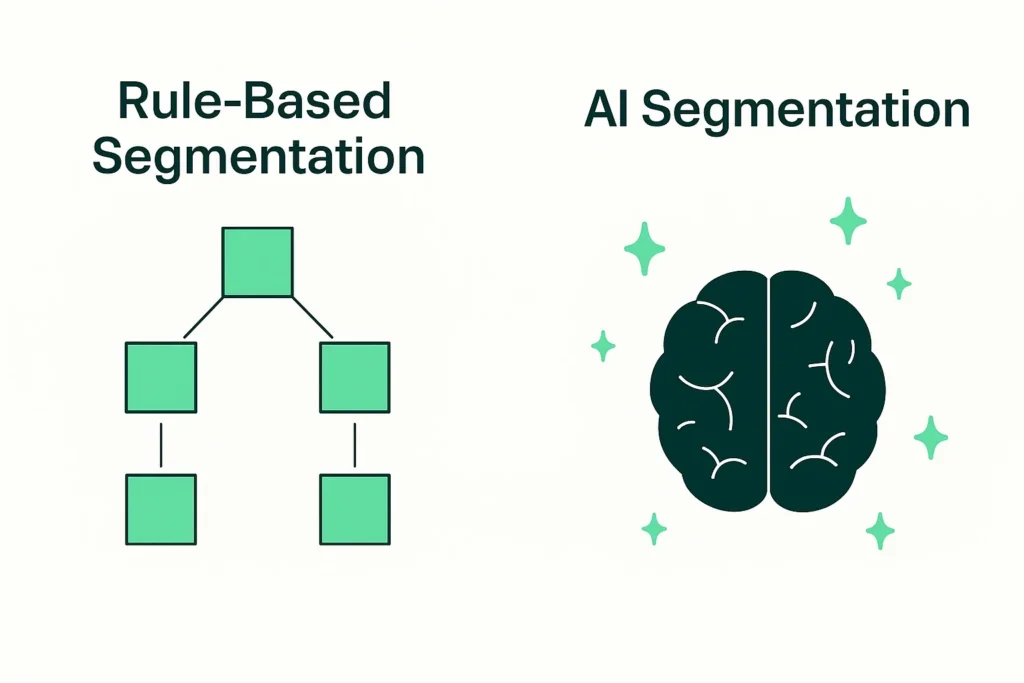
Brevo allows businesses to organize and segment contacts using customer data and attributes. This can help marketers create more targeted communications rather than treating an entire customer database as one audience.
For an online retailer, segmentation can be based on factors such as previous purchases, customer characteristics, engagement, preferences, or other information stored within the contact profile.
The important principle is simple.
Use customer information to make communication more useful, not more intrusive.
If a recommendation has an obvious connection to what someone previously purchased, it is likely to feel more natural.
Create Replenishment Reminders
Some products have predictable consumption cycles.
Think about coffee, skincare, supplements, household products, pet supplies, or printer accessories. Customers may need another purchase after a certain period, but they may not remember exactly when to reorder.
This creates an excellent opportunity for automated customer journeys.
With Brevo, businesses can create automation workflows that respond to customer activity and defined conditions. Marketing automation can be used to create sequences that continue after a customer enters a particular journey.
Imagine a customer buying a bottle of skincare serum. Instead of sending another promotional email a few days later, the brand could wait for an appropriate period and then send a simple reminder explaining that the product may be running low.
The timing will vary by product and customer behavior, so businesses should test carefully rather than assuming every customer follows the same schedule.
Recommend Complementary Products
Repeat purchasing does not always mean buying exactly the same item.
Cross selling can introduce products that naturally complement an earlier purchase.
A customer who purchases a camera might eventually need a memory card or protective case. Someone who buys a dress may be interested in accessories. A customer purchasing a laptop may eventually need a compatible accessory.
The recommendation becomes stronger when the relationship is logical.
Businesses can use customer information and segmentation within Brevo to create audiences and communication journeys around different products and customer groups.
The best recommendations do not need exaggerated sales language. A short explanation of why the product may be useful can be much more persuasive.
For example, instead of simply announcing a new accessory, the message could explain how it solves a common problem associated with the customer's original purchase.
That is helpful selling.
Use SMS When Timing Really Matters
Email is useful for detailed communication, but there are situations where a short message can be more appropriate.
Brevo supports transactional SMS, allowing businesses to send automated text messages connected to customer activity.
For repeat purchasing, SMS can be used selectively.
A retailer might send a concise replenishment reminder, a time sensitive order update, or another message where quick visibility genuinely benefits the customer.
The key is restraint.
A customer who receives too many messages across multiple channels may eventually disengage. Businesses should therefore consider the purpose of each communication and avoid duplicating the same message through email, SMS, and WhatsApp without a clear reason.
Explore WhatsApp for More Direct Communication
WhatsApp can provide another way to maintain customer relationships when used appropriately.
Brevo supports WhatsApp campaigns and transactional WhatsApp messaging, with functionality depending on the customer's subscription and setup. Businesses can use the channel for relevant communications and customer journeys while following WhatsApp's requirements and obtaining the necessary permissions.
For example, a customer who has opted in could receive a useful update related to an order or an appropriate follow up message after a purchase.
WhatsApp can be especially useful when the message benefits from a conversational format.
Again, relevance matters more than frequency.
A strong multichannel strategy does not mean sending every message everywhere. It means choosing the channel that makes the most sense for a particular interaction.
Turn Customer Engagement Into a Long Term Journey
The most effective repeat purchase strategy usually consists of several stages.
A customer purchases. They receive confirmation and useful information. They have time to experience the product. The business observes relevant engagement. A carefully timed message introduces a replenishment option, complementary product, or relevant new collection.
If the customer interacts, future communication can become more personalized.
If they do not engage, the business can avoid overwhelming them with repeated messages.
Brevo's automation and contact management capabilities can help businesses build these structured journeys while reducing the amount of repetitive manual work involved.
This is particularly useful as an online store grows.
A small retailer might manage follow ups manually when it has a few dozen orders each week. That approach becomes much harder when order volumes increase significantly.
Automation provides consistency while allowing the marketing team to focus on strategy and content.
Measure More Than Revenue
A repeat purchase campaign should not be judged only by the number of orders generated.
Businesses should also consider engagement, conversion rates, unsubscribe rates, customer response, purchase frequency, and the performance of different customer segments.
Brevo provides reporting and analytics capabilities that can help marketers understand campaign performance. Higher tier plans offer more advanced reporting functionality.
This data can help answer practical questions.
Are customers responding better to educational emails or product recommendations?
Do replenishment reminders work better after four weeks or eight weeks?
Which customer groups engage most frequently?
Which communications generate purchases without causing customers to disengage?
These questions are more valuable than simply asking whether a campaign received clicks.
A Simple Strategy for Getting Started With Brevo
An ecommerce business does not need to build an enormous automation system immediately.
A sensible starting point is one product category with a clear repeat purchase opportunity.
Create a post purchase email that helps customers use the product successfully. Add a second communication after an appropriate period. Then introduce a relevant replenishment reminder or complementary recommendation.
Monitor the results.
Once the journey is working reliably, expand it to other product categories and customer segments.
This gradual approach can make the strategy easier to manage and gives the business a clearer understanding of what customers actually respond to.
Final Thoughts
Increasing repeat purchases is ultimately about giving customers a reason to return.
Discounts can sometimes play a role, but they should not be the entire strategy. Long term customer relationships are built through relevance, good timing, useful information, dependable service, and products that genuinely meet customer needs.
Brevo gives ecommerce businesses a broad set of tools for putting those principles into practice. Email marketing, automation, SMS, WhatsApp, transactional messaging, segmentation, and customer data capabilities can work together to create a more connected post purchase experience.
The best approach is to start with the customer rather than the technology.
Ask what information would genuinely help after a purchase. Consider when a customer might reasonably need another product. Think about which recommendations are naturally connected to previous purchases. Then use automation and communication tools to deliver those messages at appropriate moments.
When every interaction has a reason, repeat purchasing becomes less about pushing another sale and more about continuing a relationship.
Frequently Asked Questions
Can Brevo help ecommerce businesses increase repeat purchases?
Yes. Businesses can use Brevo's email marketing, automation, contact management, segmentation, SMS, WhatsApp, and other customer engagement capabilities to create personalized post purchase journeys.
How can Brevo be used for abandoned cart and post purchase communication?
Brevo provides marketing automation capabilities that can respond to customer activities and trigger relevant communications. Businesses can use these workflows for customer journeys that include post purchase follow ups, depending on their setup and integration.
Can Brevo send product recommendations?
Businesses can use customer information, segmentation, and marketing automation to create more relevant product communications. The specific recommendation strategy depends on the ecommerce integration, customer data available, and selected Brevo capabilities.
Can Brevo send SMS to ecommerce customers?
Yes. Brevo supports transactional SMS and marketing SMS capabilities. Businesses can use SMS for appropriate notifications and customer communications while following applicable consent and messaging requirements.
Does Brevo support WhatsApp marketing?
Yes. Brevo provides WhatsApp marketing and transactional messaging capabilities. Availability and specific functionality depend on the account setup and subscription level, and businesses need to follow WhatsApp's requirements and customer permission rules.
How often should an ecommerce store contact previous customers?
There is no universal frequency that works for every store. It should depend on the product, typical purchasing cycle, customer expectations, and engagement. A replenishment product may justify a timely reminder, while an occasional purchase may require communication over a much longer period.
Is automation necessary for repeat purchases?
It is not essential for a small store, but automation becomes increasingly useful as customer and order volumes grow. It can help businesses deliver consistent communications without requiring marketers to manually manage every customer journey.
What is the best way to start using Brevo for repeat purchases?
Start with one customer journey. Choose a product with a natural opportunity for repeat purchasing, create a useful post purchase communication sequence, establish appropriate timing, and measure the results. Once the process is working well, expand it to additional products and customer segments.
Written By